Why Quakers are celebrating the first female Archbishop of Canterbury
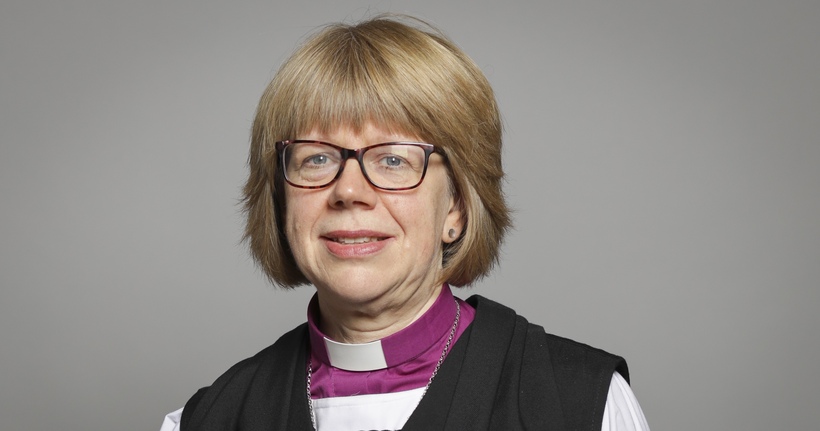
Ahead of the installation of Sarah Mullally as the new Archbishop of Canterbury, Tim Gee explores how women's ministry absolutely is Biblical.
Read an account of seventeenth century England and it will quickly become clear that the established church and the Quaker movement haven't always been best of friends.
At that time, Quakers were distinctive for the fact that both women and men provided ministry and leadership, for which they were widely disparaged by Christians across the spectrum.
Now things are different, and the historic appointment of the first ever woman to serve as Archbishop of Canterbury has been welcomed by both Quakers in Britain and the global Quaker body – Friends World Committee for Consultation – for which I work. Both have been invited to the installation/enthronement.
But even today there is still a rumble (was it even the cause for the man who heckled at St Pauls?) of some Christians asserting that 'women's ministry isn't Biblical'. In many ways it is a re-run of the row about women's ordination in the 1980s and 1990s, and again during the debate about female bishops in the 2000s and 2010s.
So let me say here, loud and clear, that women's ministry absolutely is Biblical. Furthermore there is a very fine history of women leading Christian organisations, including ours.
Made in God's image
In 1666 the co-founder of Quakerism, Margaret Fell, suffered time in prison for her faith, during which she worked through the Bible from start to finish showing how women's ministry runs right through it. The result, Women's Speaking Justified, has been recently republished by Barclay Press, in a modern English translation.
Fell argues that men and women were both made in God's image. From that point on, again and again in Bible book after book, she notes examples of both the people of God, and the church being described in feminine ways, right through to the 'new Jerusalem' of Revelation.
Women play an important role in the Gospels, including Mary, Martha, the woman at the well and the woman with the alabaster jar. Several named women supported Jesus and his ministry including Mary Magdalene, Joanna and Susanna.
Women's ministry
At the crucifixion, it was women who stood by Jesus, while the men were far off and Mary Magdalene who reported this to the men. It was also women who first learnt of the resurrection and told these things to the men, who didn't believe them at first. If the women had have simply stayed silent, then how would the world have known?
In Acts it is recognised that the time has come when "both sons and daughters will prophesy". We later hear about Priscilla, a female teacher who co-tutored a man. Paul's letters speak warmly of her work, as well as that of other women. In the passages clung to by opponents of women's speaking then, in which Paul calls on women to be silent, he can't be talking about all women.
I can't summarise all Margaret Fell's points in this article. I can commend any Christian brother who opposes women's ministry and perhaps has found this through a Google search or similar to read Women's Speaking Justified in full, and then to open your Bible again and note the examples of Deborah, Huldah, Sara, Anna the prophetess and the four daughters of Philip among others.
A shared love of God and neighbour
I guess some of my historic predecessors would have boycotted such a ceremony as next week's enthronement. Their protest however wouldn't have been based on the new archbishop's gender. As shown, there is ample and significant precedent for women's ministry and leadership.
They may well have argued that the ceremony itself seems a long way from the simplicity of the early church, or even pointed out that the word 'archbishop' can't be found in Scripture.
I chose to accept the invitation because I believe peace is more important than Biblical point scoring, and whatever differences I might have are less important than a shared love of God and neighbour.
I might add that whatever early Friends' views, they probably wouldn't have been invited anyway. The journey towards inter-church understanding has been significant since then.
I don't know Sarah Mullally the person, although I hope that in the course of our roles I will get the opportunity to do so. I do realise however, the symbolism of the moment, and how it relates to the wider Christian body. And when any in the body is honoured, I rejoice also.
Find out more about ecumenical and interfaith work in Britain