
Quakers take protest rights fight to Parliament and the UN
Quakers joined hundreds of campaigners this week in a two-day stand for the right to protest, bringing their witness to New Scotland Yard, the Houses of Parliament, and the United Nations.
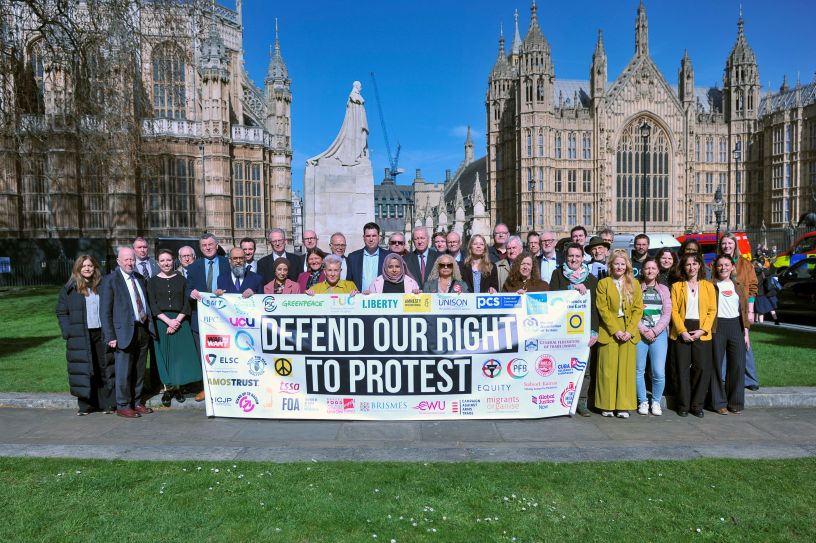
As part of this work, Quakers in Britain co-hosted a UN Special Rapporteur's informal visit to London, placing the UK's treatment of protest rights under international scrutiny.
Alongside a mass lobby of Parliament and a silent vigil outside the Metropolitan Police's headquarters, the actions signalled the breadth and seriousness of civil society's challenge to the government's direction.
Quakers host UN expert on protest rights
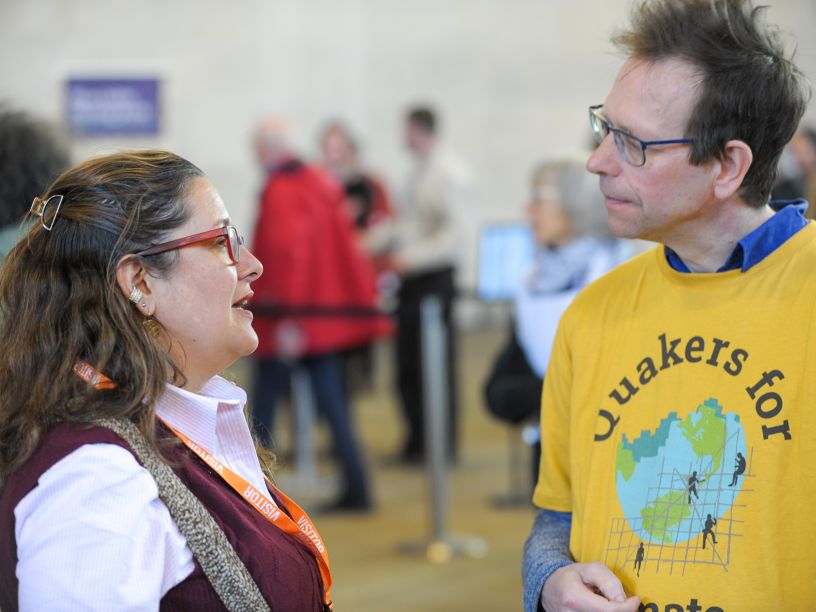
On Wednesday Gina Romero, the UN Special Rapporteur on the Rights to Freedom of Peaceful Assembly and of Association, visited the UK parliament.
Quakers in Britain co-organised two sessions: a morning civil society gathering at Liberty's offices, and an afternoon briefing for MPs in Parliament hosted by Andy McDonald MP.
UN Special Rapporteurs have previously criticised the UK's approach to protest.
The sessions gave British campaigners and parliamentarians the chance to raise their concerns with an internationally recognised expert and to carry that expertise into their conversations with government.
Silent witness at New Scotland Yard
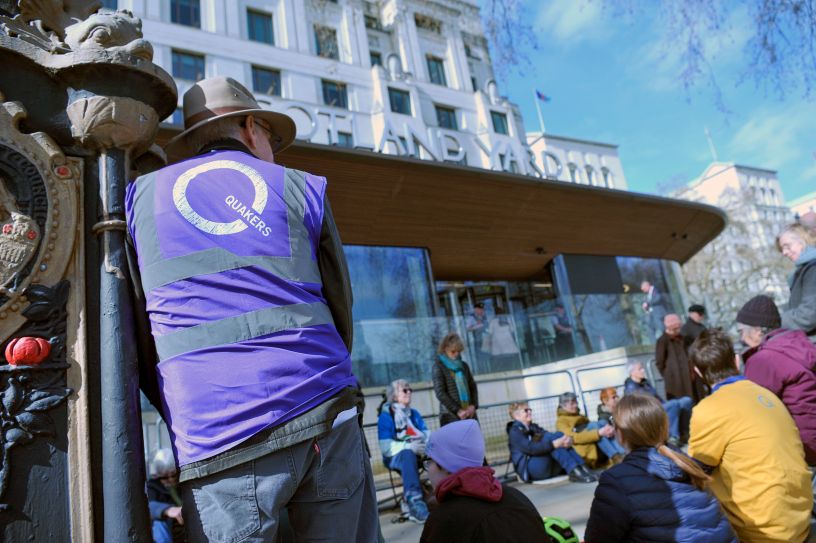
On Tuesday morning, Quakers gathered outside New Scotland Yard for the second year running for a silent Meeting for Worship.
This was a direct response to the Metropolitan Police's raid on Westminster Meeting House on 5 March, when officers arrested fifteen young activists who had hired the space for nonviolent direct action training.
It was the second such raid in less than a year. None of those arrested in the first raid was ultimately charged with any offence.
For Quakers, the raids are part of a broader pattern of chilling legitimate dissent.
Hundreds lobby Parliament
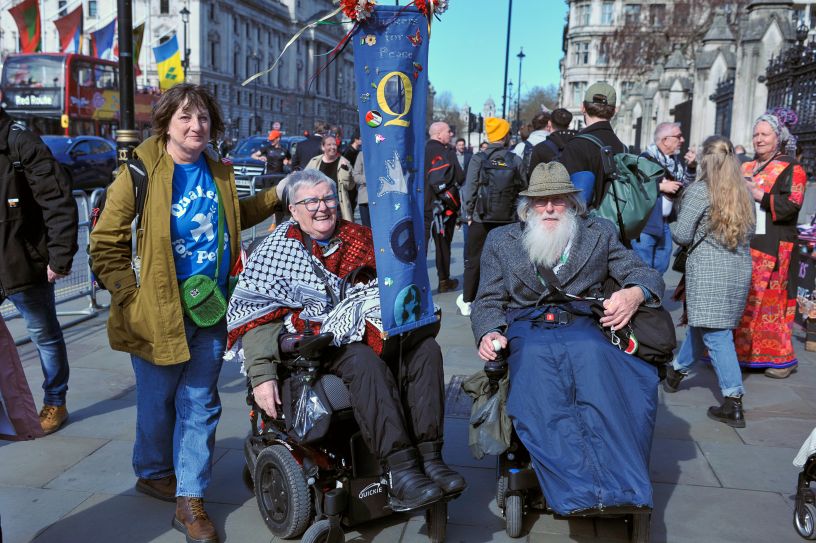
Later on Tuesday, Quakers joined a mass lobby of Parliament co-organised by Amnesty International UK, Greenpeace, Liberty, Quakers in Britain, the Palestine Solidarity Campaign, and trade unions.
Quakers in Britain supported constituents in meeting their MPs throughout the afternoon in Westminster Hall.
In the evening, Quakers in Britain's Grace Da Costa spoke at an event hosted by Kim Johnson MP.
This event brought together civil society, trade unions, and parliamentarians to make the case against the Crime and Policing Bill's most troubling provision: the "cumulative disruption" clause.
Da Costa said: “This authoritarian crackdown has to stop. We can't let another anti-protest law pass, because it won't just affect Quakers, it'll affect all of us.
“People have a democratic right to make their voices heard, whether someone else has held a protest in the same place recently or not.
“The new power that the government wants to give police is too broad, too vague and too dangerous to have any place in our democracy."
For Quakers, the right to protest is bound up with their faithful commitment to equality, truth, and working for a more just world.