
MPs pass new protest restrictions despite faith leaders’ plea
MPs voted on 14 April to approve new protest restrictions in the Crime and Policing Bill.
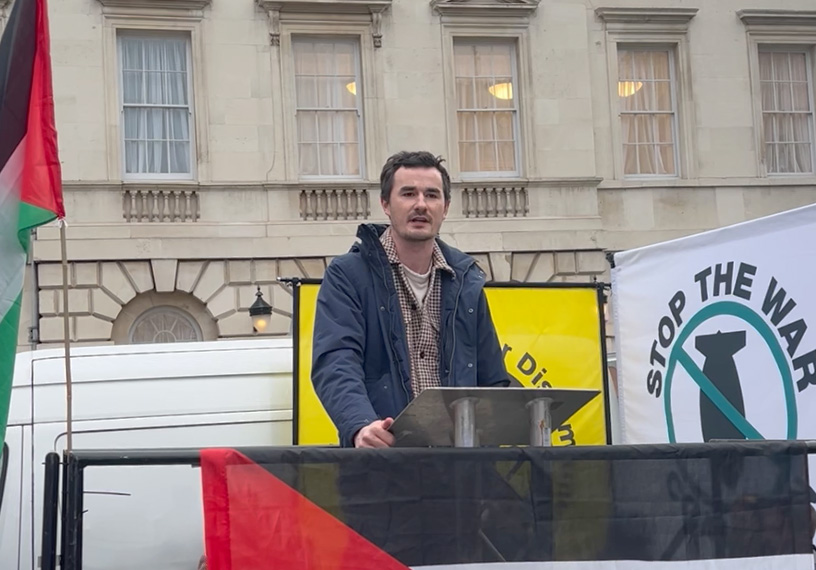
The Crime and Policing Bill includes restrictions on protests around places of worship, new offences around face coverings at protests, and a requirement for police to consider the 'cumulative impact' of protests.
Quakers in Britain and other organisations successfully campaigned for MPs to have time to debate and vote on the new 'cumulative impact' clause, but a majority of MPs voted to keep it in the bill. A clause to create a new category of 'Extreme Criminal Protest Group' was removed, however.
Leaders from across the UK's faith spectrum had urged MPs to remove the clause on 'cumulative impact' because they feared it could shut down lawful, conscience-led protest.
The joint letter, coordinated by Quakers in Britain and signed by Bishop Mike Royal, Rabbi Gabriel Kanter-Webber, Lord Indarjit Singh and 16 other faith and belief leaders, warned that the 'cumulative impact' clause is too vague and too broad.
The clause requires police to consider previous and planned protests in the same area when deciding whether to impose conditions on a demonstration.
“It could mean that we are stopped from demonstrating because another protest previously took place in the same area, even if it was on a completely different issue," signatories wrote.
The Christian, Jewish, Muslim, Hindu, Sikh, and Buddhist leaders say that despite their differences, they share a common commitment to love and justice.
Members of all their communities are led by conscience to protest peacefully on issues that matter to them, they said.
And they pointed out that peaceful protest has often involved cumulative action. Campaigns that changed the world from the suffragettes to communities standing up against fracking were built on repeated, sustained demonstration.
Their concern is shared widely. The UN Special Rapporteur on the Right to Freedom of Peaceful Assembly recently told UK civil society organisations and MPs that she was seriously concerned about these repressive new laws and the clause on cumulative disruption in particular.
The Crime and Policing Bill is the third piece of anti-protest legislation in recent years.
Responding to the vote, Paul Parker, Recording Clerk of Quakers in Britain said:
“Peaceful protest motivated by faith, belief and love should be celebrated, not criminalised. This legislation adds to the increasingly hostile climate for protesters who seek a better world for us all. Quakers will continue to campaign for these measures to be repealed and for a healthy democracy in which ordinary people can hold their leaders to account. That is what it takes to build a truly peaceful world."
Paul is due to give evidence to the parliamentary Joint Committee on Human Rights on Wednesday 15 April on how protest restrictions are affecting Quakers.