Tangled roots: personal reflections on the Swarthmore Lecture
Stuart Masters shares some of his experience of how Quakers today are shaped by the past – and might still turn things upside down.
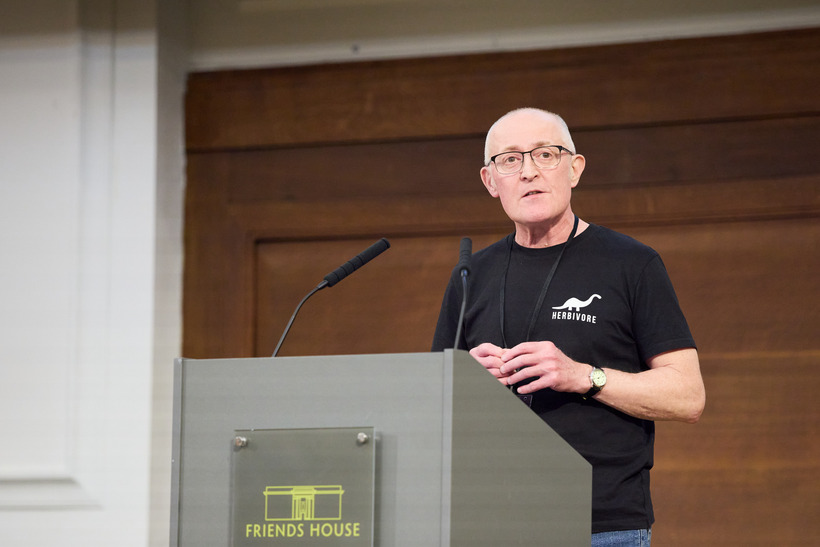
In the recent Swarthmore lecture, I explored how the complex mix of characteristics visible in the early Quaker movement continue to present us with important challenges and dilemmas today. In doing this, I didn't really talk about my personal response to these issues. However, in the book to accompany the lecture, I offer a number of personal reflections.
In this blog, I will touch on some of these observations and share four short passages from the book, in the hope that this will encourage reflection not only about how the lecture relates to the Quaker way generally, but also to our individual experiences as Friends.
Influences and motivations
We are all bubbling pots of feelings and emotions and it's not always easy for us to see where these are coming from. This is important, because what we do and how we respond to others is often driven by such motivations. As I reflected on this issue, I became increasingly aware of the many influences that have shaped me as a person from childhood to the present day. I had to accept that:
For good or ill, I embody the kind of messy complexity we have been exploring…and this prompts me to ask myself an essential question: how much of what I believe, or say, or do, has its source in the inward experience of divine guidance, and how much is a response to…other factors? (p.17)
In view of this, how can we sift through the many emotions that arise within us and separate the genuine promptings of love and truth from other impulses? What might it mean to faithfully exercise a discipline of discernment in all we do?
Community and individual
Although, in principle, I value the idea of cohesive community and worry about the way modern culture is dominated by individualism, in practice I carefully protect my own privacy and free time. This means that I'm probably not doing enough to help support and strengthen my Quaker community.
While I know that I'm not autonomous and need the counsel and support of a power that transcends me, I often seem to act in a wilful way. I recognise the limitations of modern individualism but feel wary about the potential constraints imposed by community and pull back from wholehearted commitment. (p.51)
Is this a dilemma that you struggle with too? In the past, Quakers were able to commit significant amounts of time to their shared life together. What kind of community can foster the sort of mutual support and upholding that we will all need as existing social structures begin to falter?
Spiritual and physical
I am an introvert who feels very comfortable in the silence and stillness of Quaker worship. However, I also know that it was the powerfully embodied witness of our founding mothers and fathers that enabled them to survive and grow as a radical faith community within a hostile world.
Given the powerful and inspirational example offered by early Friends, and the fact that the creative tension between quietist and charismatic is one that is so embedded within our heritage, I need to be open to the possibility that I might one day experience a more charismatic and embodied spirituality. (p.86)
How might our inward spiritual experiences prompt the sort of powerful outward physical response needed in a time of growing crisis? In what ways do our lives affirm the goodness of the human body and the earthly physicality of the natural world?
Dreams and reality
Quakers have always found themselves caught between a vision of peace and justice and a world full of violence and hatred. Although we have sometimes become too comfortable with the world as it is, our faith remains dedicated to striving for heaven on earth.
My own faith does not rely on escaping to a purely spiritual heaven but is founded instead on the promise that the whole physical creation will be transformed… The necessary power that can achieve this may be spiritual and only known inwardly, but its effects are wonderfully earthy and embodied. (p.133)
How do we decide what is life-giving in our world and what needs to be resisted? What can we do to protect ourselves from the more corrupting influences within the dominant culture?
The Quaker community remains small and, as individuals, our power is limited. However, by drawing on the tried and tested disciplines and practices of our Quaker heritage, we can discern what our distinctive contribution to the process of establishing a new creation might be. In this way, we will play our part in turning the world upside-down!