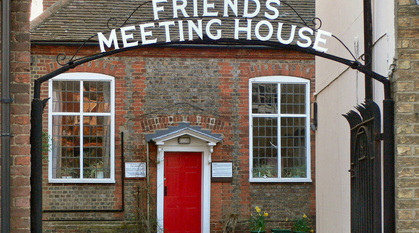
Scary silence? 3 ways Quaker meeting for worship is both easy and hard
On first impression, Quaker worship involves spending an hour sitting still, in silence, waiting to see if anyone speaks. That could easily sound weird or off-putting. Rhiannon Grant explores why it might also be attractive.
CW: suicidal thoughts
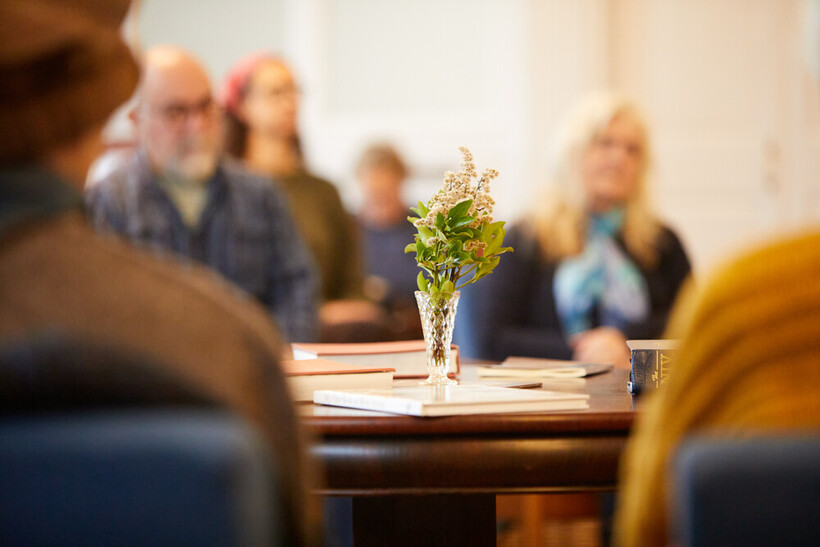
Quaker meeting for worship is meant to be about as simple as it's possible for a gathering of people to be. There's an appointed time and place so that we can actually get together, but after that, nothing is planned.
There might be silence for the whole time. We might manage to be still within and, then again, we might not. One person, or several people, might feel moved to say something, or even sing or dance.
There's a huge freedom in this, and the potential to receive a great gift – and it can be scary. Here are three reasons meeting for worship might be frightening and some reflections on how to handle them.
1. Quakers talk about stillness, but what if I can't be still?
It sounds easy to sit still – just don't do anything! – but for many of us it's not straightforward. On the physical side, it's worth knowing that almost nobody sits completely still: the goal is to be relaxed and comfortable enough to focus on worship, and people shuffle around. Legs and arms cross and uncross, sips of water are had, books are opened and closed, there are coughs and sighs, someone might need to slip out.
Similarly, while some people experience a deep mental stillness, others remain aware of their thoughts. It can be useful to deliberately let go of some things, trusting yourself to think about dinner later, and to hold other things in the Light or hand them over to God, trusting that divine energy will be present with them. A thought, image, feeling, or phrase which stays may need more attention and it's also okay to simply sit with whatever arises.
2. In the silence I can think whatever I like – but my thoughts are often distressing
Open, unplanned worship is an important and often attractive feature of the Quaker way, but in that openness we can also get upset or realise that we already were. Some people find that meeting for worship is simply not compatible with caring for their mental health, or not without some support (for example, a book to read, comfort item to hold, or quiet music in an earphone).
Others find that what comes up in meeting for worship is something they need help to address, perhaps with a counsellor or trusted friend. It can also be the case that being in community lessens distressing thoughts – personally, I've sometimes worried about going to meeting for worship at times when I was experiencing suicidal ideation, only to find that those thoughts were less intense during the worship.
And sometimes it's right to be distressed by situations, in our lives or in the news, where pain, suffering, and evil are involved. You wouldn't be the first person to cry in meeting. I wasn't.
3. Anyone is free to speak – but what if you speak too much or too little?
Spoken ministry is one of the beautiful and mysterious things about the Quaker way of worshipping. I've heard ministry which was inspiring, uplifting, challenging, confusing… even things which seem mundane or strange at first can turn out to offer me an insight.
Ministry can also be the location of a lot of anxiety. Some people worry that they'll just start speaking into the silence and whatever comes out will freak people out or they'll go on for too long. Others can't imagine ever speaking in front of all those people: it's too exposing or embarrassing. In both cases we have to find a way to have faith and to practice the process of discerning whether or not to speak.
Quakers trust the promptings of love and truth in our hearts to lead us rightly. If we feel we might be led to speak in meeting, we can work to identify the personal signs which mean it's time to for me speak: some people feel they have to say something, or feel shaky, while for others it's a gentler guidance or feeling of rightness. We also trust the community to accept, forgive, and be honest, and especially to take any ministry in the meeting, spoken or silent, in the spirit in which it is offered.
Because Quaker worship is simple, it is also very adaptable: there are meetings of many different lengths, in different locations and online, and you can experiment to see what might work for you. What would help you to be fully present and comfortable in meeting for worship?