Our everyday essentials: Human Rights Day 2026
Grace Da Costa discusses the anti-human rights moves currently taking place in the UK and how we can work to safeguard our rights.
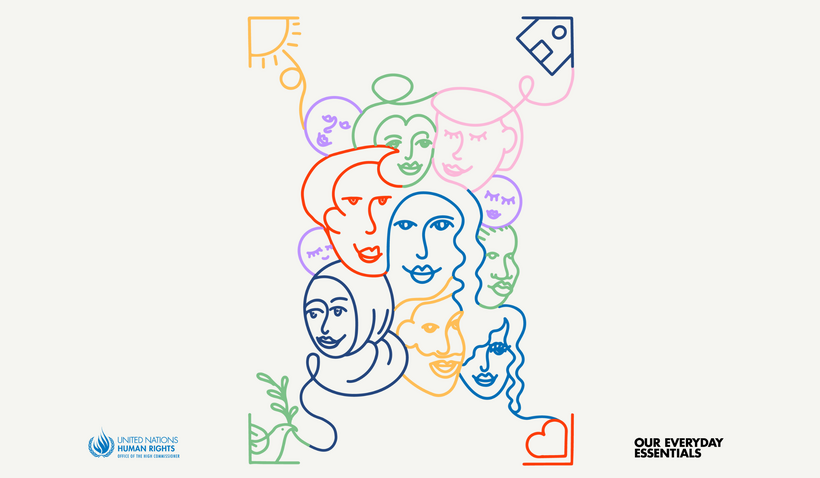
Human Rights Day on 10 December feels like a chance to celebrate what we have and promote a positive vision of what we want, counter to a popular narrative that human rights are a hindrance rather than vital necessity.
Human rights mean a lot to Quakers because of the belief that there is something sacred in every human being, which means we must all be treated with dignity and compassion.
In the UK we can celebrate the fact that we still enjoy many freedoms that people in other countries don't.
But we also know we can't take them for granted, as they are being chipped away at an alarming rate.
I heard the CEO of Amnesty International UK, Sacha Deshmukh, say recently that over the past couple of years, for the first time, Amnesty groups in other countries have started to reach out to him to commiserate him on what's going on in the UK and offer support.
This is reflected by the fact that the UK has been downgraded by the international tracker of civic space, Civicus, to 'obstructed'.
Sacha said that there is a strong 'anti-human rights' movement in the UK that we must work to oppose.
We need to remind people why our rights are important, and promote a vision of a society where everyone can flourish because their rights are respected.
New challenges on the right to protest
[QUOTE-START]
In the end human rights are about people being treated and feeling like people who matter.
- London Yearly Meeting 1986, Quaker faith & practice 24.49
[QUOTE-END]
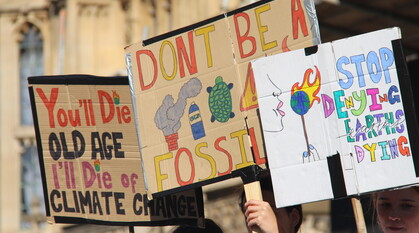
The issue occupying my mind most right now is the right to protest. It's vital for our democracy because it's how people can get their voices heard between elections. It's protected by Articles 10 and 11 of the European Convention on Human Rights.
Our freedom of expression, assembly and association can only be restricted if it's proportionate to do so to protect other rights. Yet the current and previous governments seem intent on suppressing it.
I've written blogs about it before – during the passage of the Police, Crime, Sentencing and Courts Act 2022 and again during the Public Order Act 2023.
Now there is another bill going through parliament aiming to restrict the right to protest further – the Crime and Policing Bill.
This bill would let police restrict protests that might go near places of worship, stop people covering their faces at protests, and take into account the cumulative impact of a protest when restricting it.
The latter would be a huge restriction on our freedom of assembly, allowing police to stop a protest from happening simply because too many other protests had happened in the same area – not even necessarily by the same group.
We want the government to scrap these pieces of legislation and replace them with laws that enshrine and enable our right to protest.
More broadly, Quakers in Britain are calling on the government to take a compassionate and rights-based approach to issues such as migration and criminal justice.
If our human rights are respected, we can all focus on building a better world and tackling the issues that really matter, such as the climate crisis.
Rights in action
The case of Marcus Decker highlights how protest rights are being restricted but human rights are still benefiting people in the UK. Marcus, a Quaker and environmental campaigner originally from Germany, was arrested for his part in a nonviolent Just Stop Oil protest in 2022 and sentenced to over 2 years in prison.
Under the UK Borders Act 2007, foreign nationals sentenced to 12 months or more are subject to automatic deportation consideration. While in prison, Decker was served with a deportation order to Germany, with the Home Office arguing his presence was “not conducive to the public good".
However, in November 2025 he won an appeal against his deportation on the basis that it would breach his right to a family life. His lawyers also successfully argued that the deportation would have a broader chilling effect on legitimate protest, thereby contributing to an erosion of the rights to freedom of expression and assembly across UK society. Support from prominent figures (scientists, Nobel laureates, the UN Special Rapporteur and faith leaders) reinforced that his activism served the public good rather than posing a risk.
This shows the importance of human rights as a tool for keeping families together, holding institutions to account, and protecting our ability to speak and act in line with our consciences.
What can we do?
There are some easy actions we can take to protect our human rights:
- Get up to speed on the Human Rights Act, which enshrines the European Convention on Human Rights into UK law, by reading Liberty's guide. Speak to friends and family about the importance of human rights.
- Sign Greenpeace's petition on the right to protest.
- Sign the Palestine Solidarity Campaign's petition on cumulative impact.
- Write to your MP when the Crime and Policing Bill goes back to the House of Commons – look out for more information in our Quake! newsletter about when and how.